
Dynamic Movement Intervention (DMI) is a therapy approach that uses targeted dynamic exercises to help children with motor delays develop postural control and reach developmental milestones by stimulating neuroplasticity. It integrates modern neurorehabilitation research and techniques to provoke active motor responses and foster new neural connections.

Dr. Karla was first introduced to Dynamic Movement Intervention (DMI) while searching for therapeutic options for her medically complex daughter. As a chiropractor, sports medicine doctor, and lifelong athlete, she deeply understood the power of dynamic exercise to support motor function across all ability levels. The concept of combining targeted movement with the neuroplastic potential of infants and young children resonated strongly with her.
Her daughter received a bone marrow transplant to slow the progression of Krabbe disease. Dr. Karla wanted to be able to help her more while in-patient at UPMC (University of Pittsburgh Medical Center Children’s Hospital) with her gross motor skills, so she took Level A. The results were remarkable. Dr. Karla observed significant improvements in her daughter’s postural control and ability to hold her head up—milestones that had previously seemed out of reach. She had her daughter undergo a DMI intensive once she was discharged from the hospital after 5 months while still living in Pittsburgh.
Upon returning to the Fargo–Moorhead area, Dr. Karla was surprised to find that DMI-certified providers were few and far between. Motivated by her personal experience and professional background, she pursued additional formal training in DMI and is now certified at Levels A and B, with Level C currently in progress. Once Level C is completed she will be able to offer DMI Intensives right here in the FM area.
Who is DMI for?
Regardless of level of cognition and extent of neurological deficit or damage, affected children benefit from DMI motor intervention as it pertains to stimulating neuroplasticity in the developing brain. Children diagnosed with any type of motor delay including conditions such as; Down Syndrome, Cerebral palsy, global developmental delay, hypotonia, chromosomal abnormalities/genetic disorders, spinal cord lesions or acquired brain injury may benefit from this form of therapy. Children at risk, such as those who are born prematurely can also benefit from this therapy due to the strong neuroplastic changes that this treatment stimulates within the developing brain.
What Happens During a DMI Session?
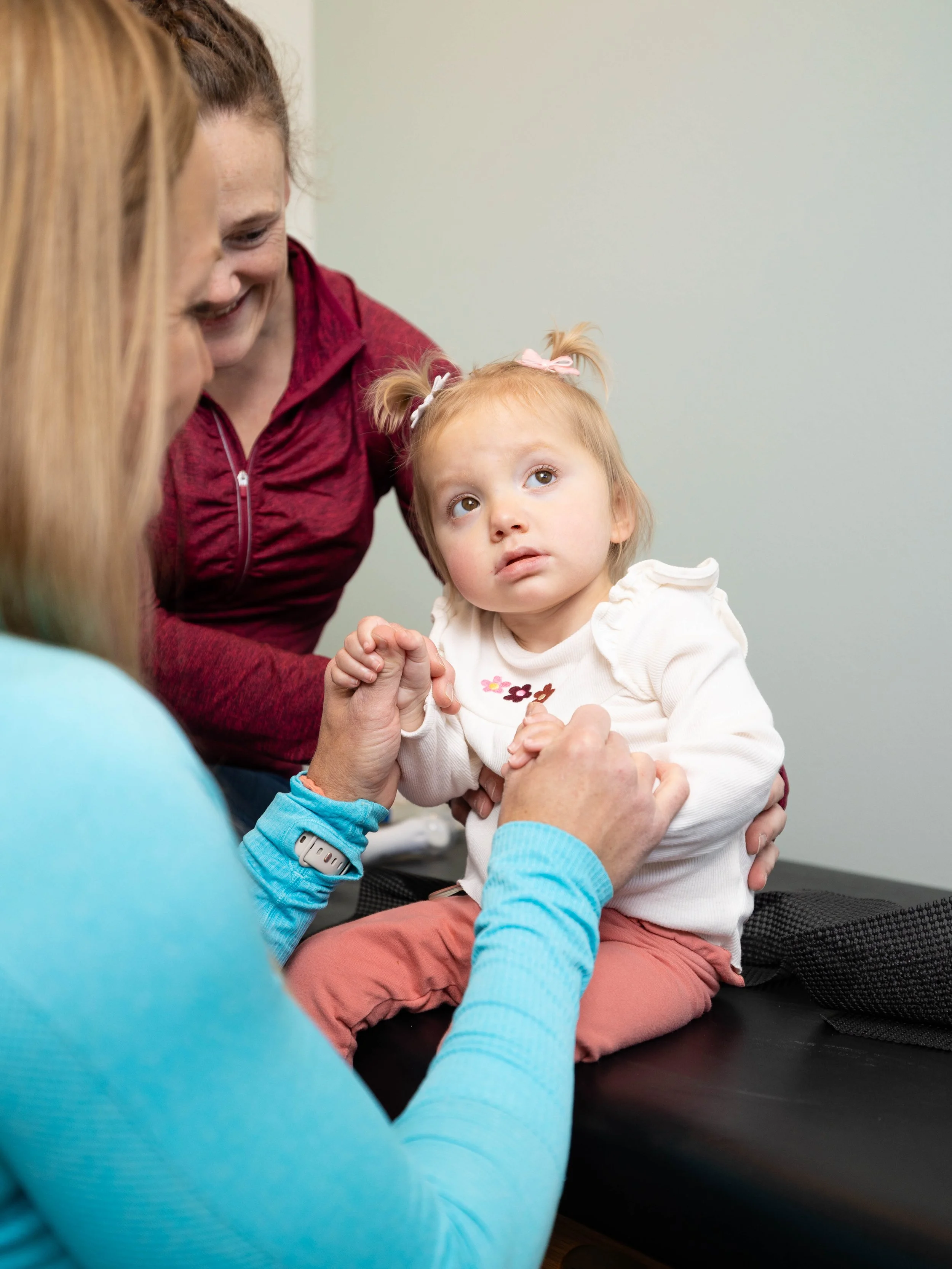
First, the therapist performs a brief assessment to identify specific motor deficits and goals.
Based on that assessment, the therapist selects dynamic exercises tailored to challenge the child’s neurological system, focusing on alignment, strength, postural control, and balance.
The exercises often involve movement against gravity, progressive “support lowering” (i.e., giving less physical support over time), and repetition to help the movement become more automatic.
Over time and with repetition, these movements aim to become more fluid, with improved postural control and enhanced functional motor skills, such as sitting, standing, crawling, or walking.
DMI therapy integrates seamlessly with other therapeutic techniques and equipment. These complementary tools are often used during sessions to enhance alignment, optimize outcomes, and support the child’s overall development.


FAQs
-
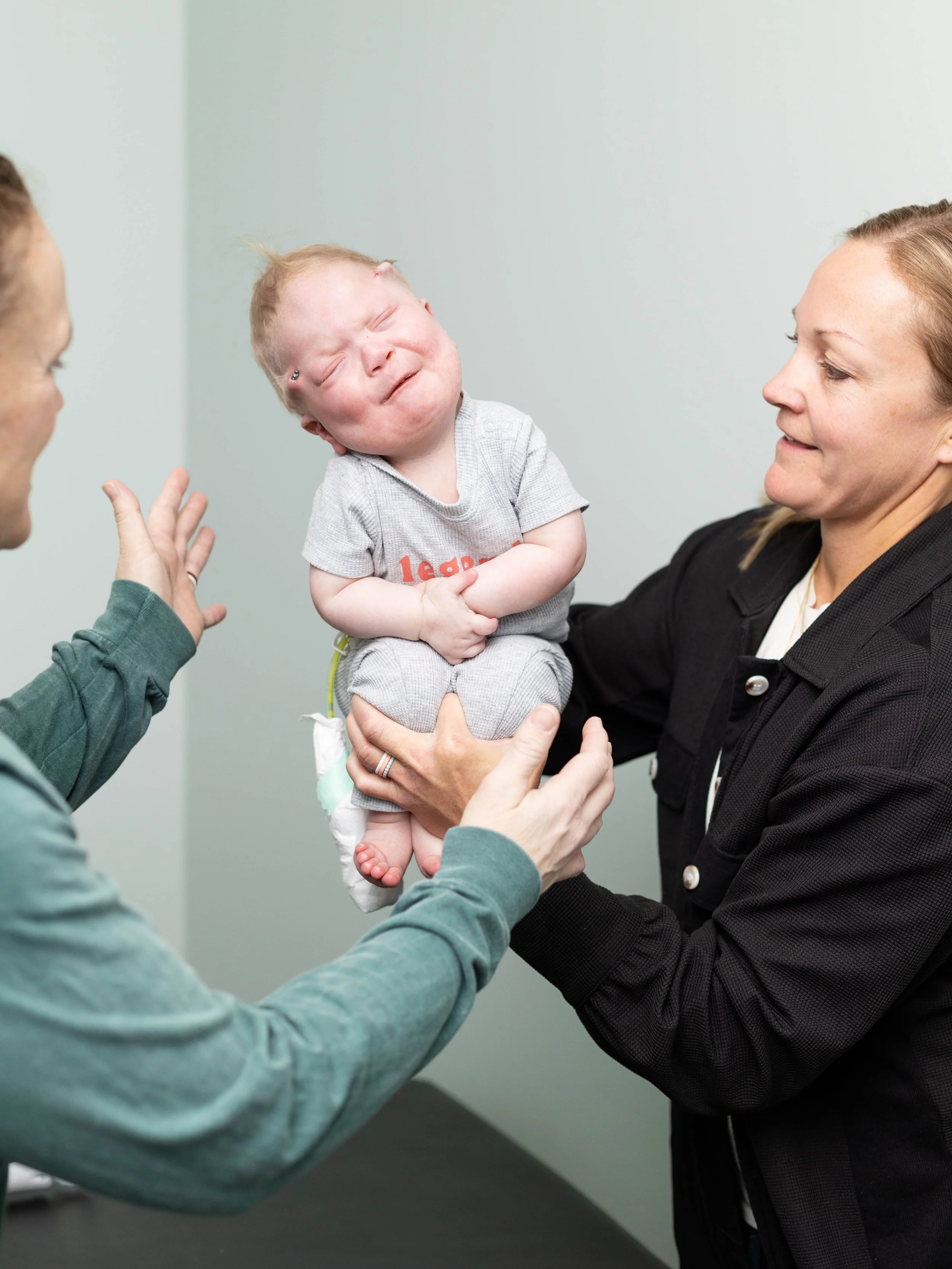
High-level challenge: DMI deliberately challenges the child neurologically, provoking active, automatic motor responses rather than passive movements.
Support progression: Therapists decrease support over time (moving from proximal to distal support), forcing the child to use more of their own postural control.
Gravity-based work: Many exercises involve resisting or moving in relation to gravity, which helps with alignment and balance.
Neuroplasticity-focused: The intervention is rooted in research about brain plasticity, meaning it’s designed to re-wire or strengthen neural pathways.
Functional stretching: Instead of static stretches, DMI uses active, functional stretching during movement tasks to improve muscle length and reduce risk of tightness or contractures
-
Sessions typically last 45–60 minutes.
Currently, we are offering 4 week sessions that involve coming in twice a week for a total of 8 sessions.
-
Yes, when conducted by trained and certified practitioners, DMI is generally safe.
Since the therapy involves active movement, exercises are adapted based on each child’s abilities and current motor control to avoid injury.
Therapists continuously monitor the child’s response, adjusting support, intensity, and exercise difficulty to match the child’s progress.
-
We are training and encouraging muscles to fire that may not be used to working. This can be hard work for them, like a good workout at the gym, but littles don’t have ways to articulate or understand “this is hard.” As we get to konw your child and their limits we will work with them to push through the hard stuff without going into complete meltdown mode.
-
We do not accept health insurance and are considered “out of network.”
We can provide you with a superbill to submit to your insurance company. Depending on your insurance company and if you’ve reached your deductible, you may be reimbursed by your insurance company. You will need to contact your insurance company to find out if your insurance does this.
If your child is on a waiver, please reach out to us at ehpsportsmedicine@gmail.com and we can assist you in how to proceed with that.
*We do accept HSA and FLEX spending cards as well as Visa and Mastercard, check, and cash.
-
HSA/FLEX spending cards
Visa and Mastercard
Check
Cash
-
We encourage our DMI families to email us at ehpsportsmedicine@gmail.com. You can share some basic information, and we will give you a call within a few days. We like to schedule all 8 visits at once to ensure you get onto our schedule.
-
Yes. Home programs are an important part of maximizing progress. Therapists may give specific handling techniques or simple movement exercises tailored to your child.